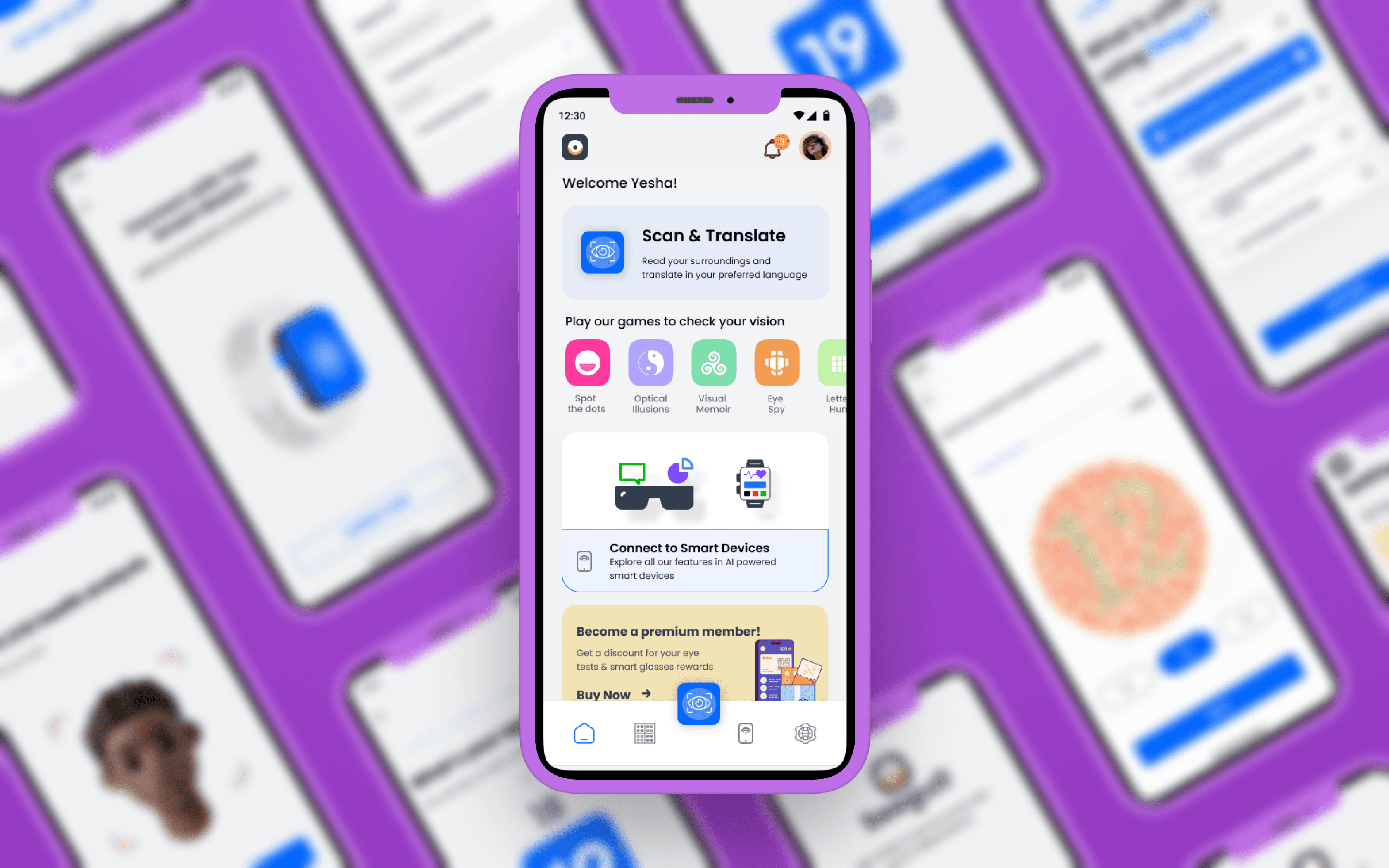
Vision AI Companion

AIkshyn explores how AI-driven everyday tools can shift eye health from reactive treatment to proactive daily care especially for digitally fatigued users and aging populations.

September 2025

April 10,2025

Problem Inspiration

Reactive, Not Preventive Care

Problem Inspiration

Reactive, Not Preventive Care

Problem Inspiration

Reactive, Not Preventive Care

Role

Product Designer & UX Researcher
Role

Product Designer & UX Researcher

Role

Product Designer & UX Researcher

key Strategic Decisions

Preventive Care · Inclusive Design · Supportive AI

key Strategic Decisions

Preventive Care · Inclusive Design · Supportive AI

key Strategic Decisions

Preventive Care · Inclusive Design · Supportive AI

Context

How Might We

How might we make everyday life easier for people with vision challenges through accessible, preventive eye care?

Why this matters?

Why this matters?

Why this matters?

Pain, Insight & Opportunity

Pain, Insight &
Opportunity

Vision Impacts Life Outcomes
Impaired vision affects learning, work productivity, safety and independence making eye health a critical quality-of-life issue, not just a medical concern.
Access Remains Unequal
Designing for Speed and Simplicity
Existing eye-care tools are often expensive, complex or inaccessible for elderly users and non-English speakers, leaving millions without practical daily support.
Creating simple worksheets takes approximately 15 minutes each day, indicating a need to streamline and speed up the process
Indiability to focus on instruction and student engagement. Need for streamlining these tasks and support professional growth.


Lack of Visibility into Individual Performance
While each student's performance is mapped across various topics,
there is a lack of clear visibility into individual strengths and
weaknesses making it challenging to identify areas for improvement
High Administrative Burden Reducing Instructional Focus
Indiability to focus on instruction and student engagement. Need for streamlining these tasks and support professional growth.
AI Enables Preventive Care at Scale
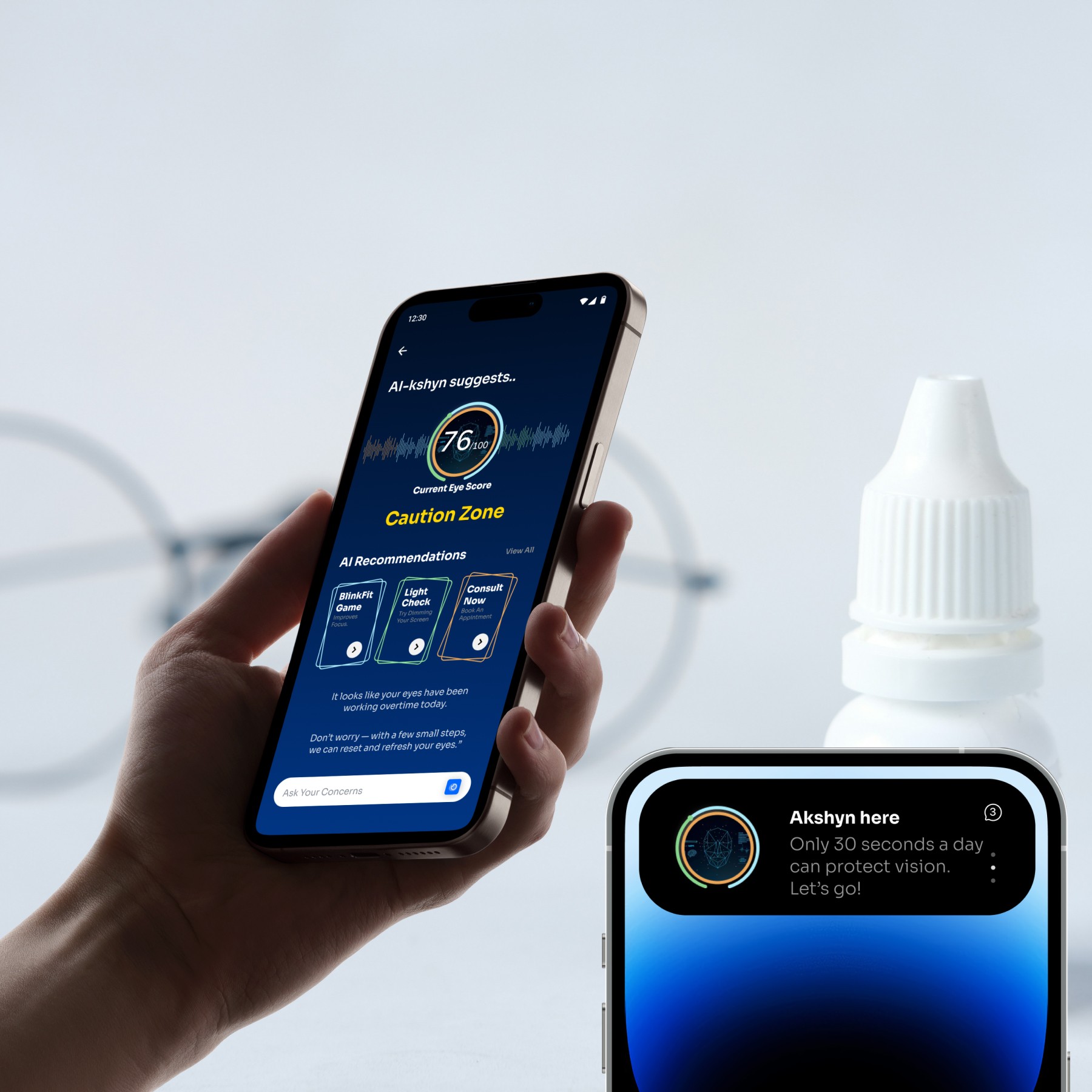
AI transforms passive signals into personalized nudges that help users act early, reducing long-term health risks through everyday guidance.
While each student's performance is mapped across various topics, there is a lack of clear visibility into individual strengths and weaknesses making it challenging to identify areas for improvement

My Approach

AI Driven Design

I followed a user-centered design process to ensure solutions addressed real behaviors rather than assumptions with Human-Centered, Research-Driven, Accessibility-First appraoch.

AI as Adaptive Layer with Responsible Health AI

Human-in-the-loop design and transparency built trust and prevented over-reliance on automated recommendations.
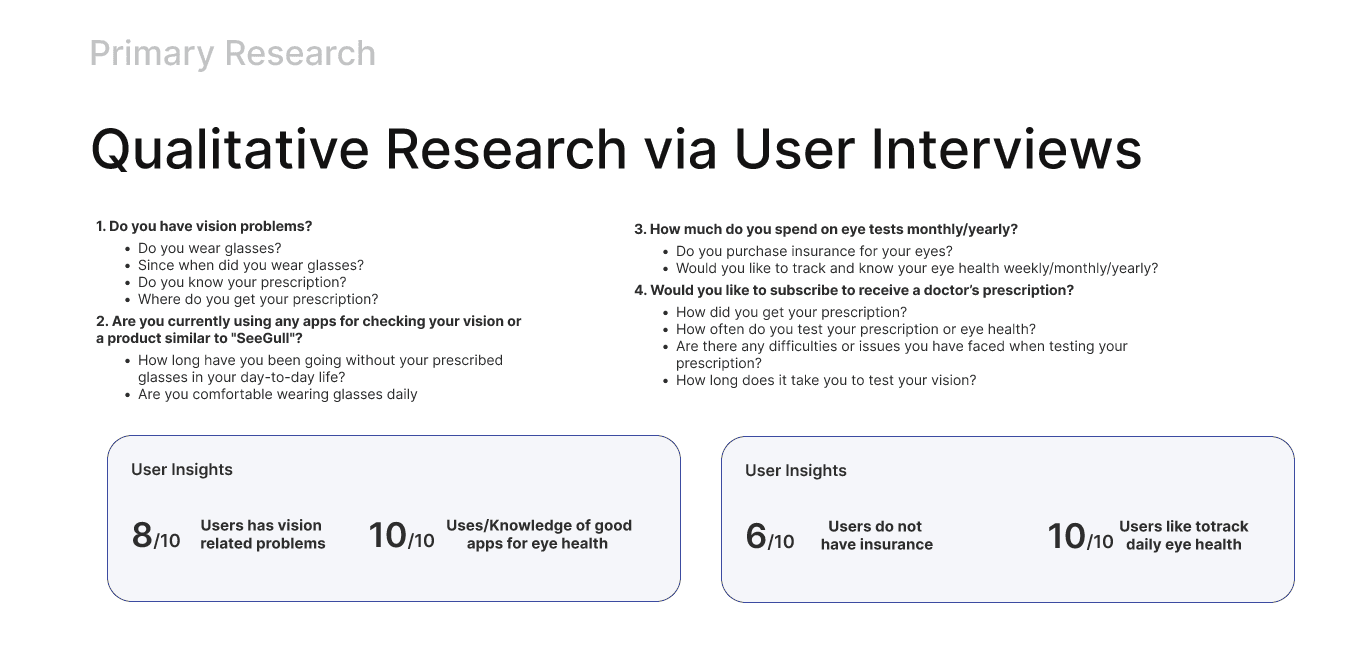
UX Research
  • User interview & surveys to understand digital habits and eye fatigue
  • Interviews across age groups and tech comfort levels
  • Accessibility reviews of existing health applications

01
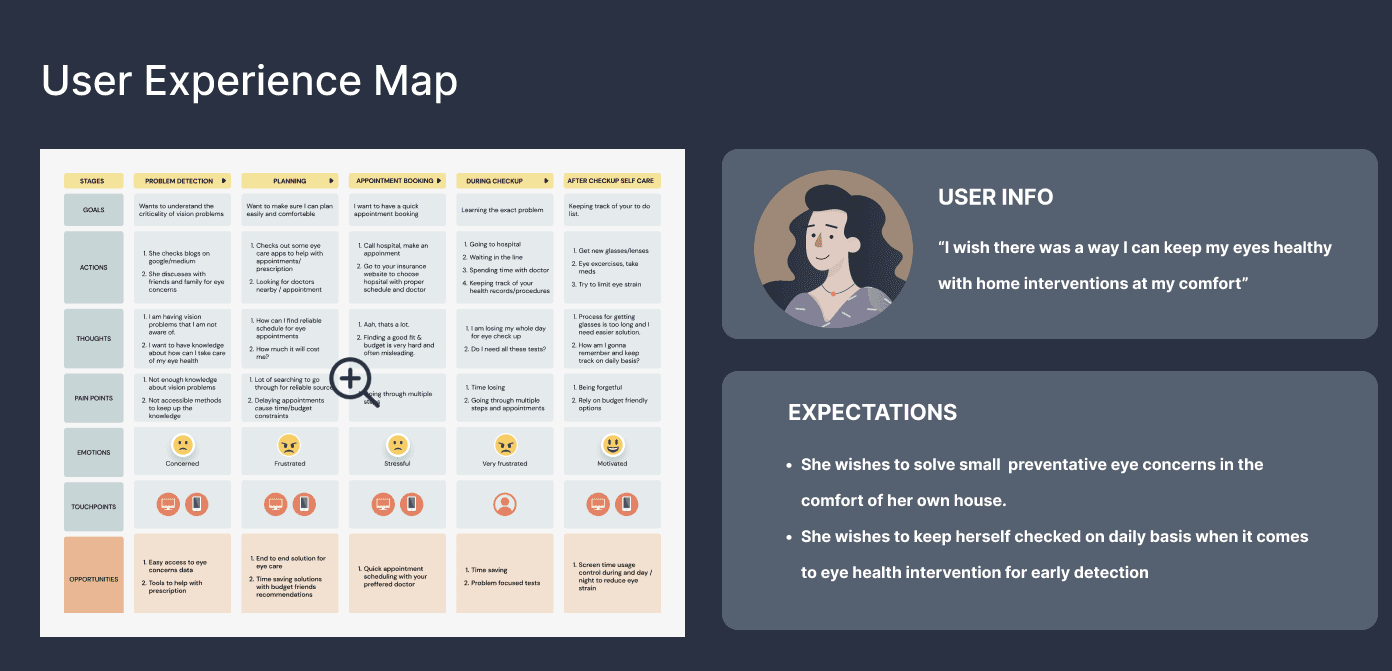
Synthesis & Framing
  • Persona development representing young professionals, aging users, and visually impaired users
  • Experience mapping to identify moments of neglect, anxiety, and confusion in eye-care journeys

02
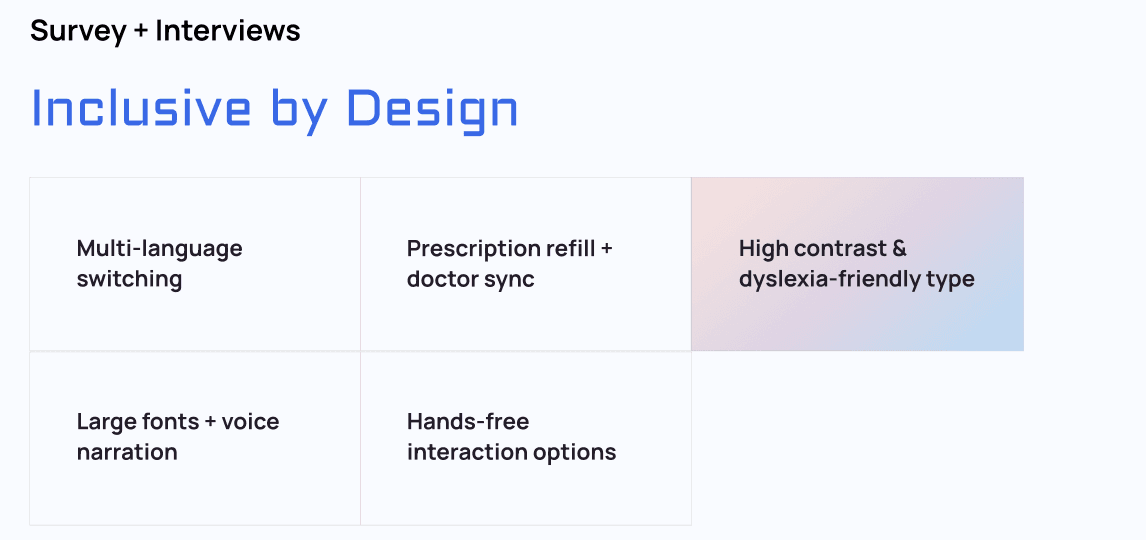
Design Exploration with Feature Prioratization
  • Ideation around habit-forming interactions
  • Interaction flows across mobile, wearable, and hands-free contexts

03
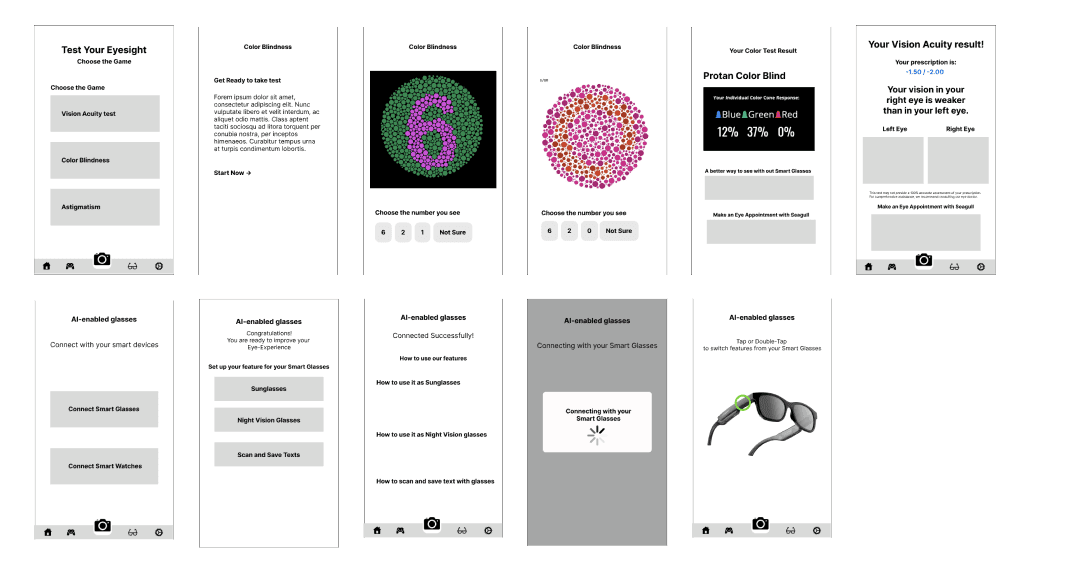
Low to Hi-Fidelity Design + Inclusive Product Strategy
  • Mobile app experience (iOS & Android)
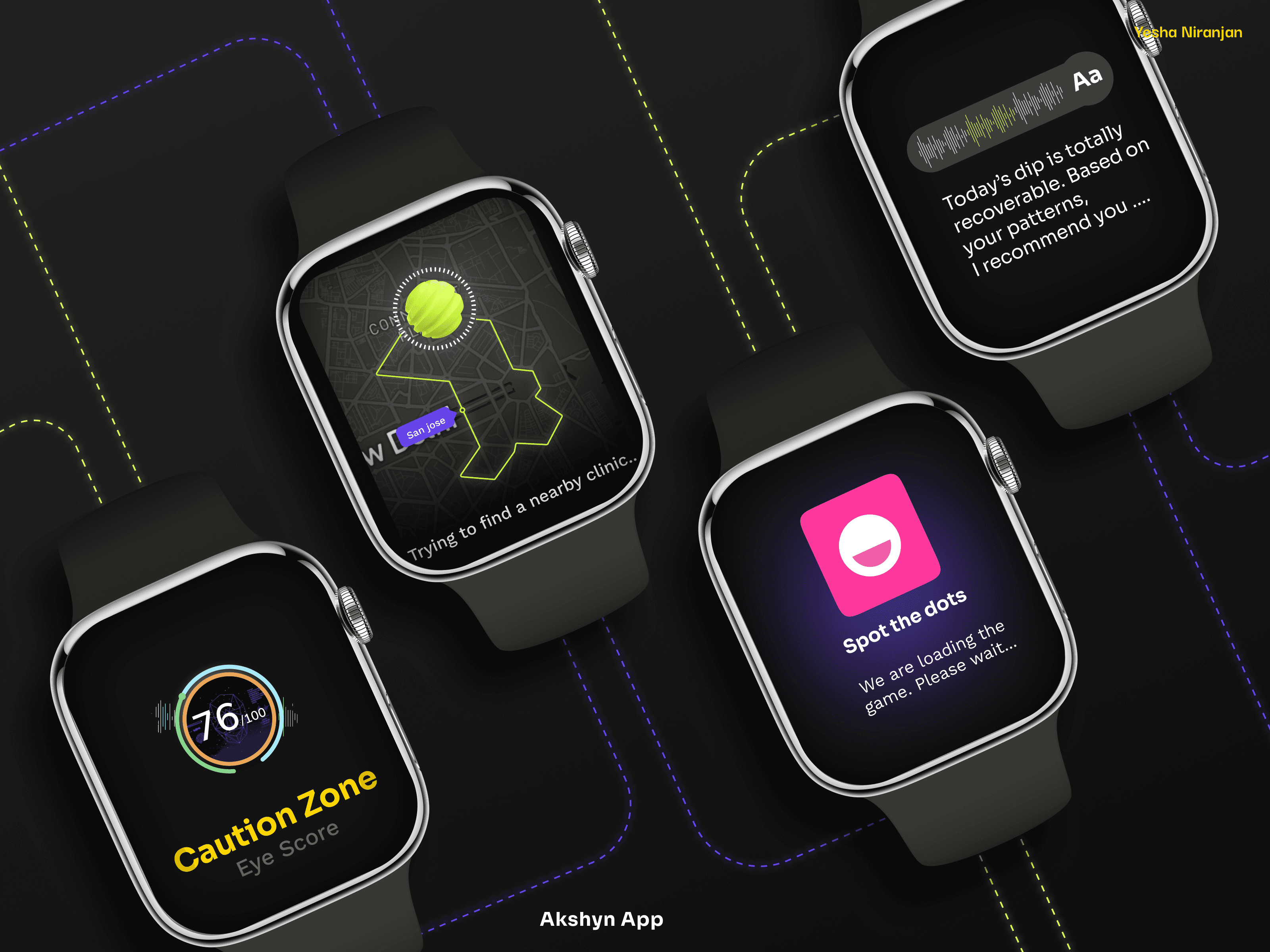
  • Smartwatch interface for quick feedback
  • Hands-free concepts for accessibility and future AR integration

04

Deliverables

ENSURING REAL-WORLD RELEVANCE

ENSURING
REAL-WORLD RELEVANCE

  1. Design decisions prioritized accessibility from the start
  2. AI-Assisted Preventive Care Model to Encourage healthy habits and Recommend professional care when needed
  3. High-Fidelity Cross-Device Prototype
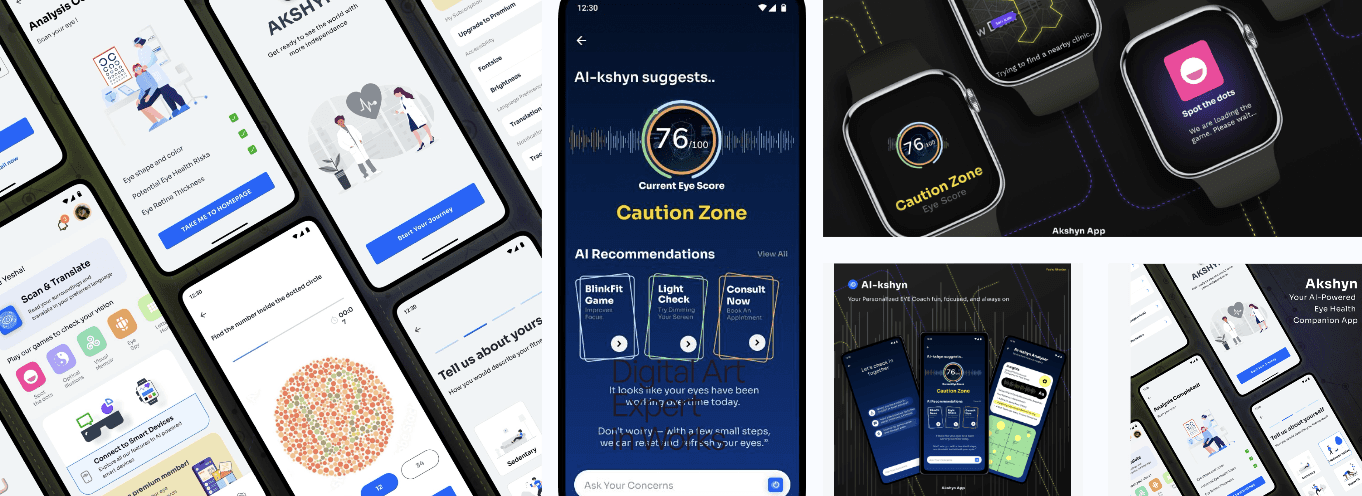
Next Steps on Future Directions

Longitudinal Health Tracking with Collaborate with healthcare providers to validate insights and integrate professional checkups into the ecosystem. Enable month-over-month vision trend analysis to detect gradual deterioration.

Lesson learned

Trust Matters More Than Intelligence

Users valued AI that explains and supports decisions, not systems that feel like medical authorities or black boxes. When health tools feel supportive instead of clinical, users are more likely to return and stay consistent.

Send a Message